Mastering the perfect Miso Soup Recipe at home is a culinary rite of passage for anyone who loves authentic Japanese flavors. This isn’t just a side dish; it is a comforting, golden-brown bowl of liquid gold that balances salty, savory, and sweet notes in every spoonful. If you have ever stared at the cloudy swirls of a restaurant bowl and wondered how to replicate that magic, you are in the right place.
In this comprehensive guide, we are breaking down the science of the Miso Soup Recipe. From the foundational dashi to the delicate cubes of silken tofu and the vibrant green scallions, every element is designed to create a restaurant-quality experience in under 20 minutes. Get ready to elevate your home cooking with a soup that looks as beautiful as it tastes.
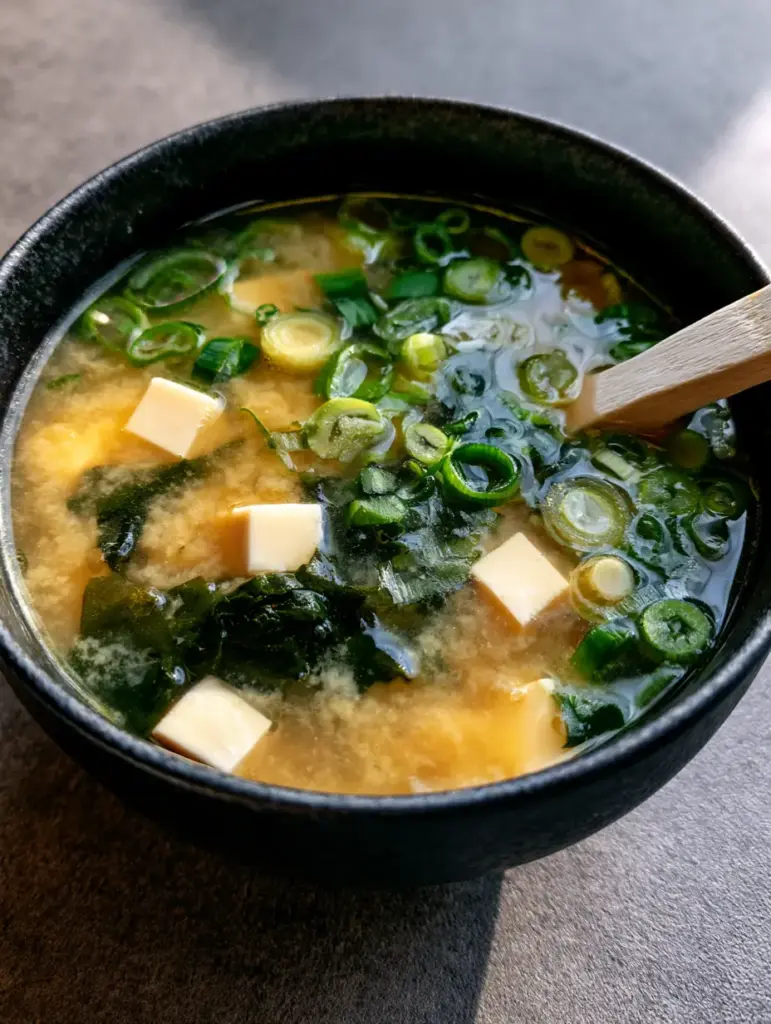
Why This Authentic Miso Soup Recipe Works
- Visual Brilliance: A stunning golden-brown broth with visible “miso clouds” that signal perfect suspension.
- Texture Play: The contrast between tender, rehydrated wakame seaweed and the melt-in-your-mouth silken tofu cubes.
- Aromatic Depth: A base of artisanal dashi that provides a deep ocean-umami foundation.
- Fresh Finish: A generous scattering of thinly sliced green scallions and spring onion rings for a bright, peppery bite.
If you love comforting starters, you might also enjoy our creamy potato soup or our flavorful ginger garlic chicken noodle soup. For a more substantial Japanese-inspired meal, don’t miss our homemade ramen recipe.
Essential Ingredients for a Perfect Golden-Brown Broth
To achieve the visual and flavor profile of a professional Miso Soup Recipe, quality ingredients are non-negotiable. Here is what you will need for your shopping list.
Dashi (The Umami Base): 4 cups (960ml) of high-quality dashi. You can use homemade (kombu and katsuobushi) or a high-end dashi powder. This provides the savory backbone.
Miso Paste: 3 to 4 tablespoons (50g to 65g) of miso paste. For that classic golden-brown look, a blend of white (Shiro) and red (Aka) miso—often called Awase miso—is the gold standard.
Silken Tofu: 1 block (12oz / 340g) of silken tofu. We use silken because it provides the smooth, uniform cubes that float elegantly in the broth. Avoid firm tofu here as the texture is too graining for this specific Miso Soup Recipe.
Dried Wakame Seaweed: 2 tablespoons (10g). These small flakes expand into dark green, tender ribbons when rehydrated, providing a beautiful visual contrast.
Green Scallions: 3 stalks, very thinly sliced. Use both the white and the bright green parts to get those characteristic rings floating on the surface.
Sea Salt: A pinch (to taste), though the miso usually provides enough sodium. Always taste before adding!
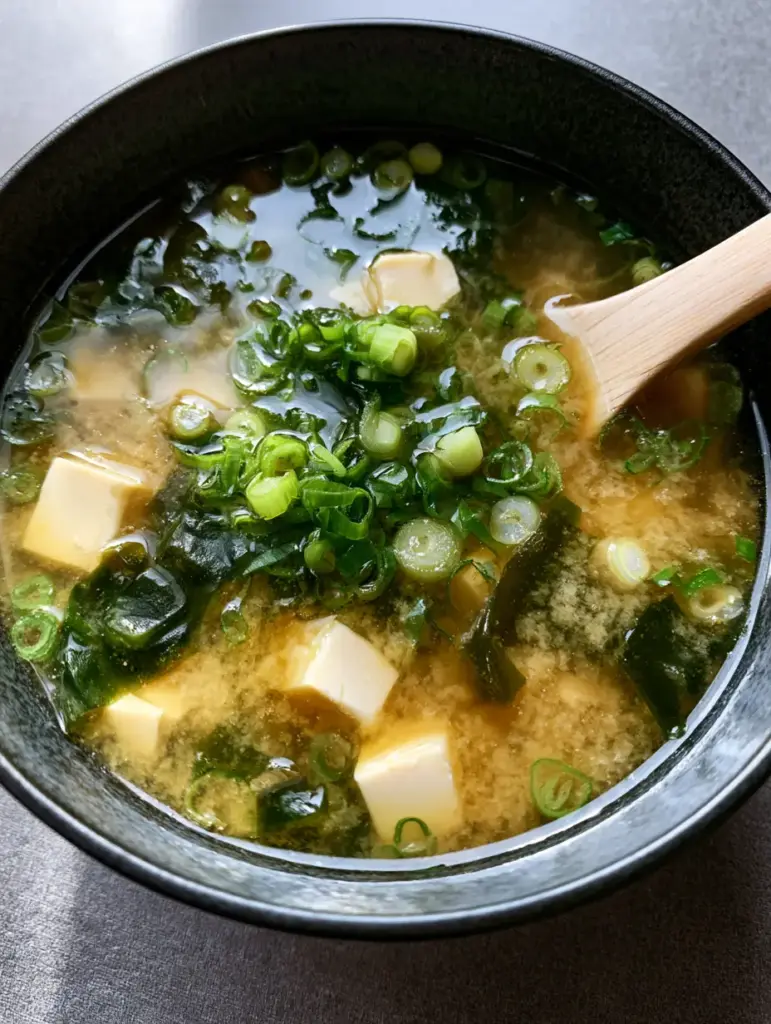
The Step-by-Step Blueprint for Savory Success
1. Prepare the Dashi Foundation
In a medium saucepan, bring your 4 cups (960ml) of dashi to a gentle simmer over medium heat. Do not let it reach a rolling boil, as this can dissipate the delicate marine aromas. You want to see small, lazy bubbles breaking the surface.
2. Rehydrate the Wakame and Prep Tofu
While the dashi warms, place your dried wakame in a small bowl with a little warm water for 5 minutes. Drain and set aside. Meanwhile, carefully cut your silken tofu into uniform 1/2-inch (1.3cm) cubes. The precision of the cubes is vital for the visual appeal of a professional Miso Soup Recipe.
3. Incorporate the Tofu and Seaweed
Gently slide the tofu cubes and the rehydrated wakame into the simmering dashi. Let them cook for just 1-2 minutes until the tofu is heated through. Be extremely gentle; silken tofu is fragile and can break if stirred too vigorously.
4. The Miso Suspension Technique (Crucial Step!)
Remove the saucepan from the heat. This is the secret to a perfect Miso Soup Recipe: never boil the miso. Boiling destroys the probiotics and alters the flavor profile. Place your miso paste in a small fine-mesh sieve and submerge the bottom of the sieve into the hot dashi.
Use a spoon to rub the miso through the sieve into the liquid. This ensures there are no clumps and creates that beautiful, cloudy, golden-brown liquid with visible swirls of miso paste.
5. Garnish and Serve
Ladle the soup into traditional matte black ceramic bowls. Ensure each bowl gets an even distribution of tofu and wakame. Scatter a generous amount of thinly sliced green scallions and spring onion rings over the top. The bright green against the golden broth is the hallmark of a great Miso Soup Recipe.
Expert Tips for the Ultimate Pinterest-Worthy Bowl
- The Wooden Spoon Aesthetic: For the perfect photo, rest a light-colored wooden spoon inside the bowl, partially submerged. It adds a rustic, authentic touch.
- Miso Freshness: Store your miso paste in the refrigerator with a piece of plastic wrap pressed directly against the surface to prevent oxidation and darkening.
- Dashi Quality: If using dashi powder, look for brands that list “bonito” or “kombu” as the first ingredient rather than MSG or salt.
- Slicing Technique: Use a very sharp knife for the scallions. You want clean “rings,” not crushed stalks, to ensure they float elegantly on the surface sheen.
Storage, Reheating, and Make-Ahead Advice
Miso soup is best enjoyed immediately after preparation to appreciate the delicate suspension of the miso solids. However, if you have leftovers, store them in an airtight container in the fridge for up to 2 days.
When reheating your Miso Soup Recipe, do so over low heat on the stovetop. Stop as soon as it is steaming. Do not let it boil, or the miso will become grainy and lose its nuanced flavor. We do not recommend freezing miso soup, as the texture of the silken tofu will change significantly, becoming spongy.
What to Serve With Your Miso Soup
While this soup is a star on its own, it pairs beautifully with other Japanese-inspired dishes. Consider serving it alongside a fresh peach burrata salad for a fusion lunch, or as a starter for a hearty Hawaiian loco moco. For a cozy night in, it is the perfect companion to a platter of prosciutto wrapped mozzarella appetizers.
Frequently Asked Questions
No, you should never boil miso soup once the miso paste is added. High heat destroys the delicate flavors and beneficial probiotics of the miso, and can cause the soup to become grainy.
You can prepare the dashi and prep the tofu/seaweed ahead of time. However, it is best to whisk in the miso paste just before serving for the best flavor and texture.
Use silken tofu for the best texture and add it very gently to the simmering broth. Avoid stirring vigorously once the tofu is in the pot.
Traditional miso soup uses dashi made from bonito flakes (fish), so it is not vegetarian. To make it vegan, simply use a kombu-only dashi or a mushroom-based dashi broth.
For a traditional golden-brown broth, use ‘Awase’ miso, which is a blend of red (Aka) and white (Shiro) miso. It offers a perfect balance of salty and sweet.
The Authentic Golden-Brown Miso Soup Recipe
Ready to bring the flavors of Tokyo into your kitchen? This recipe yields a traditional, visually stunning soup that hits every umami note perfectly. Grab your matte black bowl and let’s get cooking!
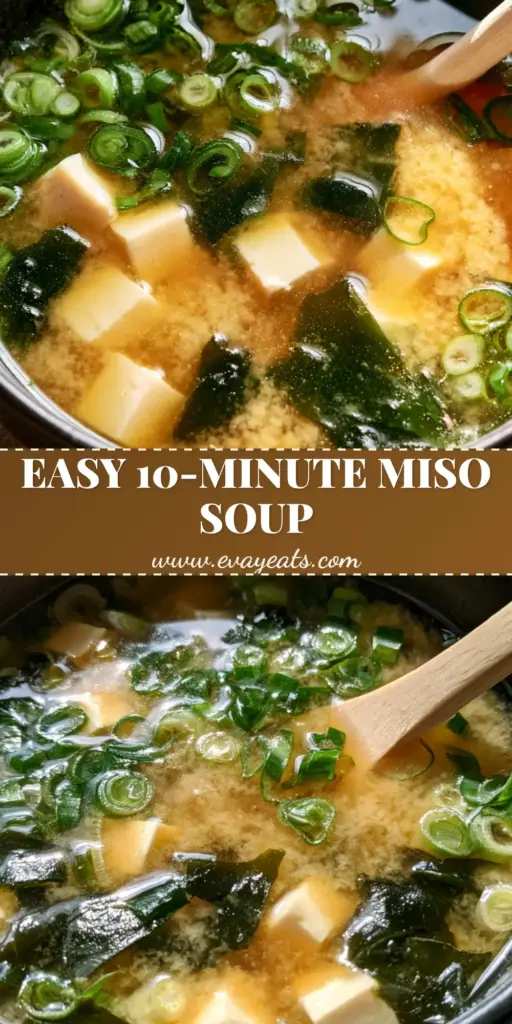
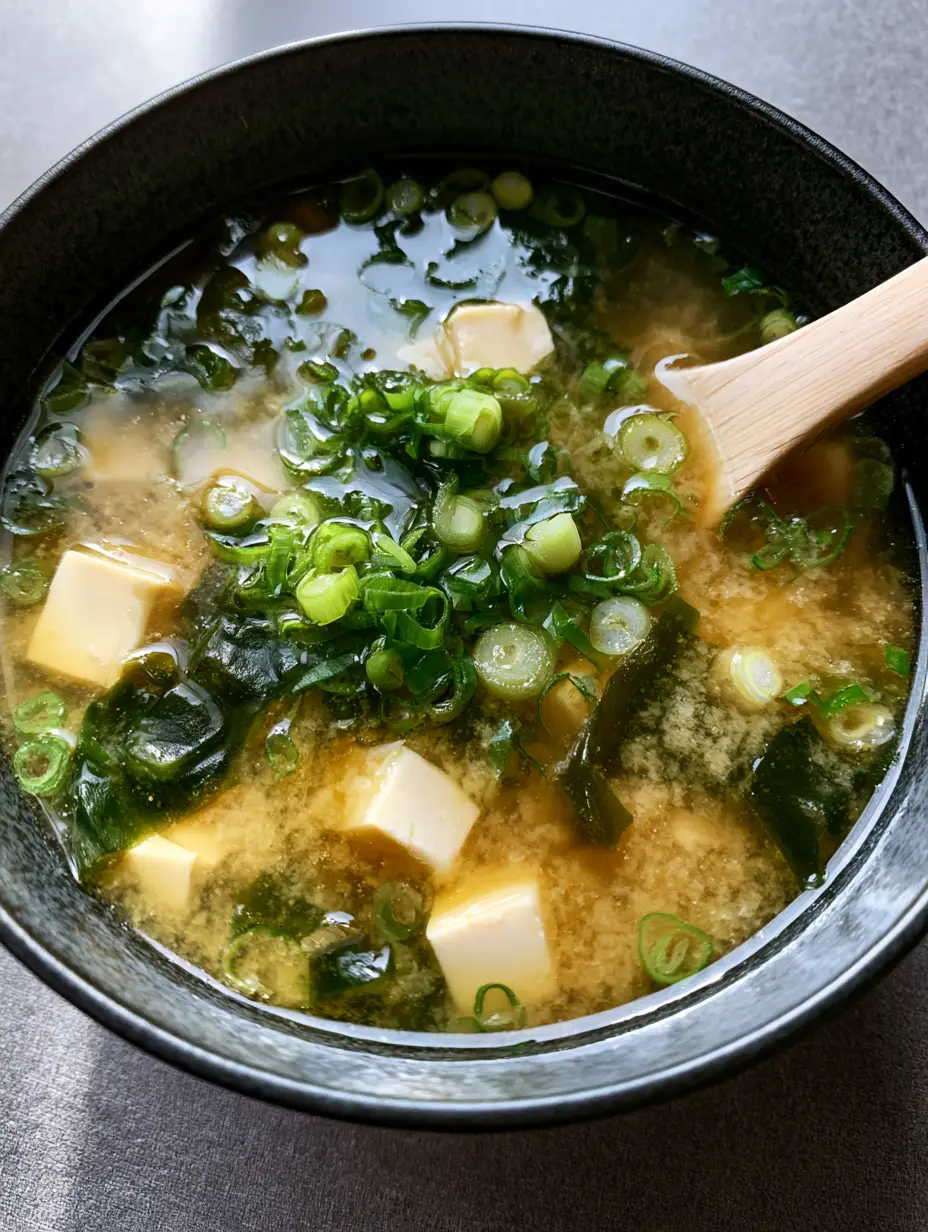
Miso Soup Recipe: The Ultimate Guide to Authentic Japanese Umami
Ingredients
Equipment
Method
- In a saucepan, bring the dashi to a light simmer over medium heat. Do not let it boil vigorously.
- Gently add the cubed silken tofu and rehydrated wakame to the dashi. Simmer for 1-2 minutes until tofu is warm.
- Turn off the heat. Use a mesh sieve to dissolve the miso paste into the broth, ensuring no clumps remain.
- Ladle into bowls and top with a generous amount of sliced green scallions.
Notes
Use a blend of red and white miso for the most authentic golden-brown color.
Save This Recipe to Pinterest!
Did you love this Miso Soup Recipe? Don’t forget to save it to your “Healthy Recipes” or “Japanese Cooking” board on Pinterest! Following evay_eats helps us bring you more authentic, visual-first recipes every week. If you made this, snap a photo and share it in the comments below—we love seeing your golden-brown broth and tofu cubes! Please leave a 5-star rating in the recipe card if you enjoyed it.